THE-ICONOMIST publications are included in collections such as the contemporary art library at the Beaux-Arts in Paris (France), the Schaulager/Laurenz Foundation (Switzerland), the contemporary collection at the m-AG — Museum of the Avant-Garde (Switzerland), and the photography library at the Moreira Salles Institute (Brazil), among others. In 2023, the magazine was featured in the exhibition The Intelligent Library at PhotoVogue, at Base Milano. In 2025, THE-ICONOMIST participated in Offprint Paris as an exhibitor.
/press
“THE-ICONOMIST’s latest issue is hectic and “suffocating” in its use of online image banks. The magazine has never really operated within the requirements of a conventional magazine. This isn’t just because the issues don’t have any advertisements or an ISBN number, or even that it doesn’t have a website that can be indexed by Google. The magazine defies a traditional editorial approach at every turn.After its first four issues’ focus on AI-generated visuals, the magazine has returned with its fifth edition — a printed exploration of surveillance in the digital age.”
— ELLIS TREE, It’s Nice That
“Leafing through the eighth issue of The Iconomist feels like plunging into a dense sea of images drawn from widely different origins and visual regimes. Appropriated, manipulated, distorted, corrupted, cropped, filtered and recombined, these images accumulate into a surface that is intentionally overwhelming, producing a visual field that feels both vertiginous and delirious.”
— ELAINE RAMOS
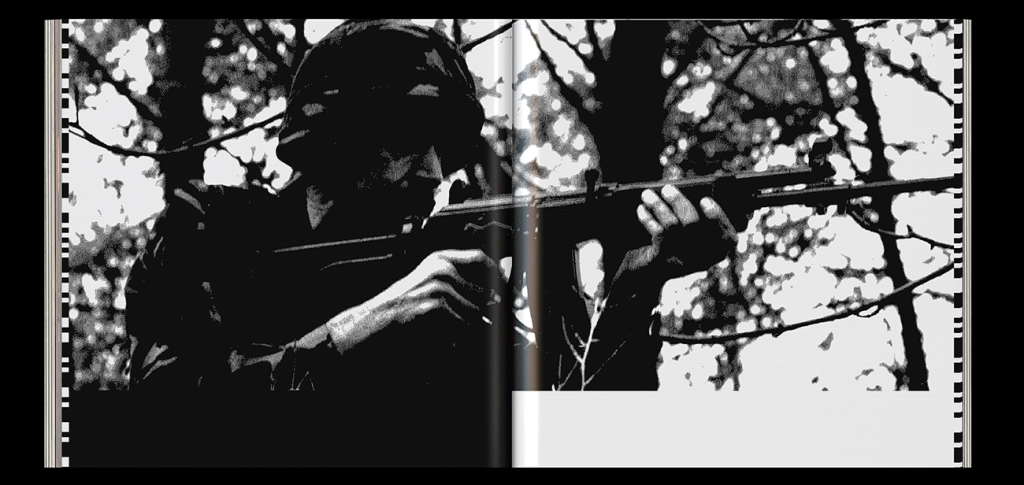
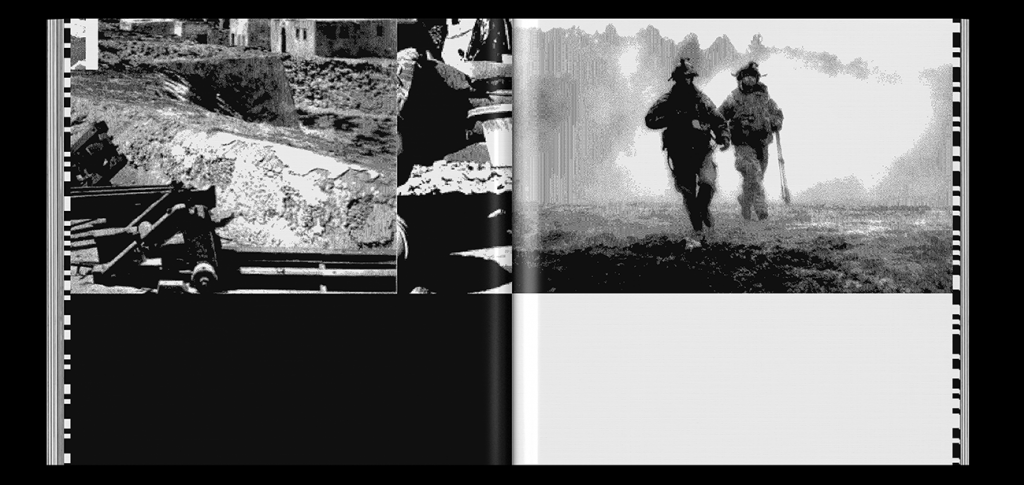
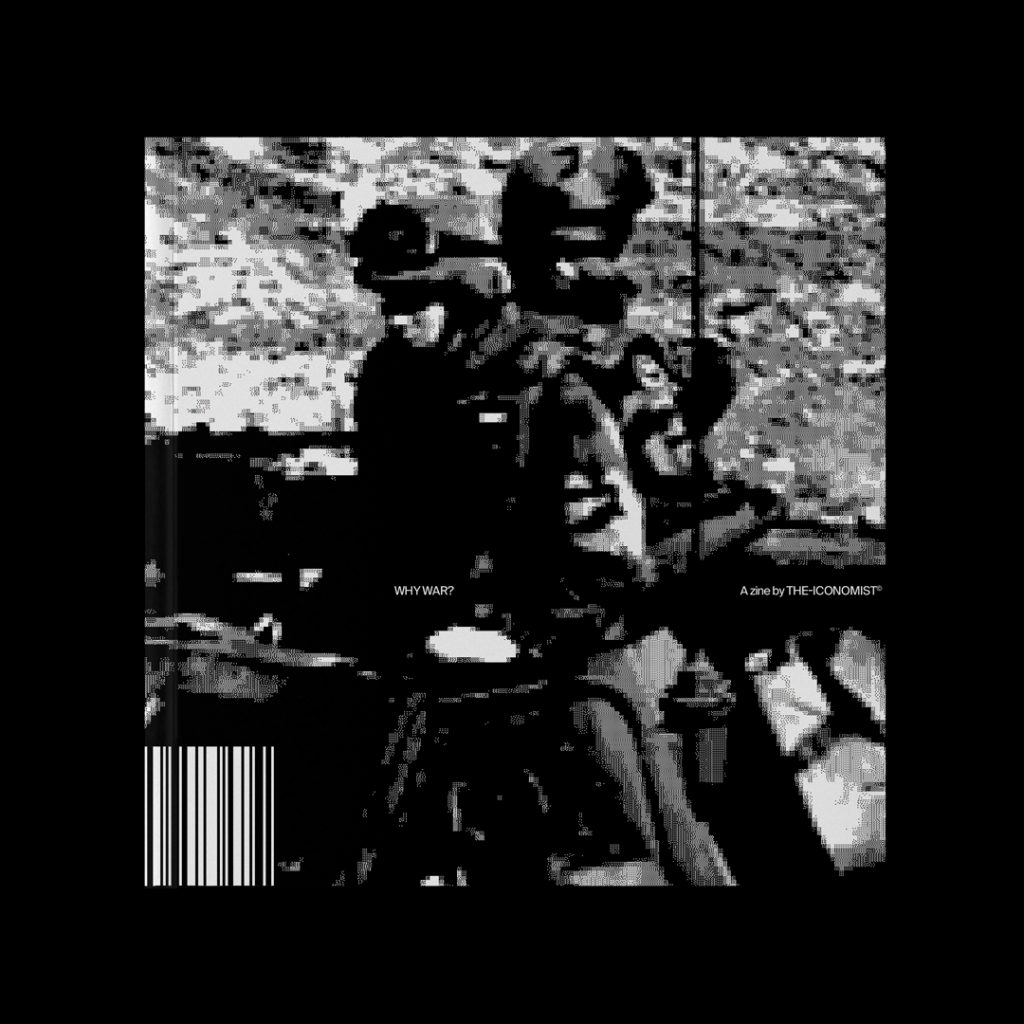
WHY WAR? starts from the question posed in the letter Why War?, exchanged between Sigmund Freud and Albert Einstein in 1932: why does war persist, even in the face of all the rationality we have supposedly achieved? The images gathered here do not aim to illustrate the history of conflicts, but to reveal their permanence — as if war, rather than an event, were a structure that reconfigures itself with each generation. According to recent studies by the Peace Research Institute Oslo, 2024 saw the highest number of simultaneous armed conflicts since the end of the Second World War — more than sixty active wars in thirty-six countries. Faced with this repetition, the images speak less of borders and more of a human condition that insists on not ceasing. This zine is, therefore, an archive of the continuity of violence — and an attempt to ask again, with Freud: why?